Day 2 Overview: Mastering the Future of Ketamine Therapy
The Pharmacological Science That Separates KRI-Trained Clinicians
Day 2 moves into the pharmacological science that fundamentally separates a KRI-trained clinician from the standard ketamine clinic — covering the critical variables that determine whether a patient achieves lasting response or drops out of treatment entirely. The afternoon transitions to supervised clinical training with hands-on patient management under expert oversight.
“The difference between a clinician who achieves 70% treatment response and one achieving 25% is not the certificate on the wall — it is mastery of pharmacokinetics, plasma targeting, and the discipline to individualize every infusion.”
Advanced Curriculum Modules
ADVANCED KETAMINE THERAPY
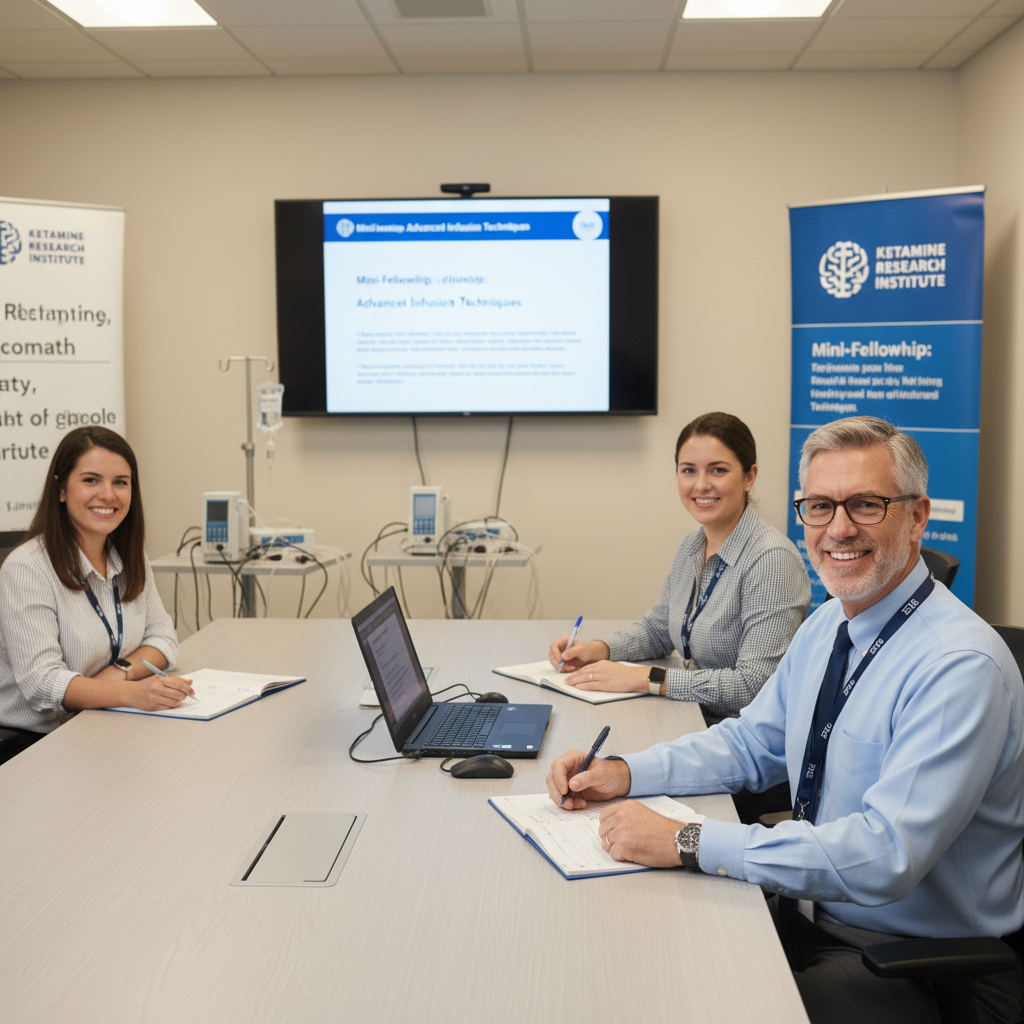
Advanced ketamine therapy begins where standard practice stops. While most clinics apply a fixed 0.5 mg/kg dose and hope for the best, advanced clinicians recognize that identical doses produce wildly different plasma levels from patient to patient — and that the difference between a non-responder and a responder often has nothing to do with the drug itself.
True clinical mastery means targeting specific plasma concentrations rather than weight-based doses, integrating pharmacogenomic data to anticipate how each patient metabolizes ketamine, and systematically correcting the metabolic and hormonal deficiencies — low magnesium, MTHFR dysfunction, testosterone deficiency — that silently sabotage outcomes before the infusion even begins. It means understanding that benzodiazepines blunt efficacy, that lamotrigine interferes with the glutamate cascade ketamine depends on, and that navigating complex polypharmacy is non-negotiable in treatment-resistant cases.
It also means recognizing that depression, PTSD, bipolar disorder, and neuropathic pain each require different plasma concentration targets — and that monitoring heart rate, HRV, and dissociative depth in real time allows you to adjust dynamically rather than watching a fixed timer count down.
The gap between a 20% and a 70% response rate isn’t due to luck. It’s the difference between applying a protocol and practicing precision medicine.
Inside Day 2 — ADVANCED CURRICULUM MODULES
MODULE 6: Pharmacokinetics & Plasma Concentrations
Module 6 reveals why weight-based dosing is fundamentally unreliable, exploring the core pharmacokinetic variables — volume of distribution, hepatic metabolism, and elimination half-life — that cause two patients receiving identical mg/kg doses to achieve wildly different plasma levels. You’ll master the critical concepts of Cmax, MEC, and MTC, and understand how targeting the therapeutic plasma sweet spot, measured in ng/mL rather than mg/kg, is the clinical transition that separates precision practice from guesswork.
Why does weight-based dosing consistently produce unpredictable and highly variable plasma levels?
Core PK variables: volume of distribution, hepatic metabolism rates, and elimination half-life
Defining Cmax, MEC, and MTC — identifying and targeting the therapeutic plasma sweet spot
The clinical transition from mg/kg dosing to targeted plasma concentrations measured in ng/mL
MODULE 7: Mechanism of Action — The Master Molecule
Module 7 takes you inside the molecular machinery that makes ketamine unlike any other psychiatric drug, examining the distinct roles of its (S)- and (R)-enantiomers, the downstream glutamate surge that triggers BDNF and mTORC1-mediated neuroplasticity, and its documented activity across more than 23 receptor sites. You’ll also explore the neuroscience of treatment-resistant depression as a network disconnection syndrome — a framework that reframes how you understand what ketamine is actually repairing at the level of the Default Mode, Salience, and Central Executive networks.
Racemic ketamine: the distinct roles of (S)- and (R)-ketamine enantiomers and active metabolites
NMDA receptor blockade, the downstream glutamate surge, and neuroplasticity cascades (BDNF, mTORC1)
Ketamine as a ‘dirty drug’ — documented activity across 23+ distinct receptor sites
Depression as a disconnection syndrome: DMN, salience network, and CEN network dysfunction
MODULE 8: Mastery of Delivery & Risk Management
Module 8 builds the clinical risk management skills that separate a confident ketamine practitioner from a reactive one. You’ll compare delivery routes and their bioavailability trade-offs, develop a comprehensive understanding of ketamine’s neurological, cardiovascular, respiratory, and hepatic risk profile, and learn to manage dissociation and sympathomimetic effects in real time — with clear protocols for recognizing and responding to airway emergencies when the unexpected occurs.
IV, IM, intranasal, and oral routes — comparative bioavailability profiles and clinical trade-offs
Comprehensive risk profile: neurological, cardiovascular, respiratory, and hepatic considerations
Managing dissociation and sympathomimetic cardiovascular effects in real time during infusion
Airway emergency recognition, management protocols, and long-term ketamine use risk differentiation
MODULE 9: Advanced Pharmacokinetics & Target-Determined Infusions
Module 9 elevates your pharmacokinetic understanding to an advanced clinical level, introducing the three-compartment model that governs how ketamine distributes, accumulates, and clears across infusion phases. Drawing on KRI's proprietary dataset of 800 infusions, you'll learn how infusion rate maps to receptor occupancy and achieved Cmax, identify the ED50 and ED75 plasma sweet spots that define optimal dosing targets, and begin working with the KRI Clinical Companion for real-time plasma concentration guidance.
The 3-compartment pharmacokinetic model: central distribution, peripheral accumulation, and elimination
KRI’s proprietary 800-infusion clinical dataset: identifying ED50 and ED75 plasma sweet spots
The precise correlation between infusion rate, receptor occupancy saturation, and achieved Cmax
Introduction to the KRI Clinical Companion for real-time plasma concentration targeting

Afternoon Clinical Session 2

Supervised Infusion Training
The Afternoon Clinical Session on Supervised Infusion Training is where knowledge becomes clinical competence. Under direct oversight of experienced KRI clinicians, you’ll execute every phase of the infusion encounter — from patient positioning through discharge — developing the procedural fluency that only comes from doing, not watching.
You’ll make real-time dose selection decisions based on individual patient variables, titrate infusion rates dynamically, and monitor clinical response as it evolves. Adverse event management is practiced systematically, with hands-on recognition and response protocols for hypertensive episodes, tachycardia, and emergence reactions, alongside airway management readiness covering BVM ventilation, laryngeal mask airway, and endotracheal intubation.
Equally important, you’ll develop the clinical judgment to distinguish when intervention is required versus when holding therapeutic space serves the patient better — a skill no textbook can teach.
The session closes with complete documentation of the procedure note and structured training in patient debriefing, ensuring your practice meets the highest standards of both clinical safety and therapeutic integration from day one.
Inside Clinical Module 2:
Perfecting the Setup: A Guide to Pre-Infusion Preparation
• Preparation of the infusion suite
• The Pre-Procedure Checklist for Ketamine Infusions
• Step-by-Step Suite Setup and Setting up Your Infusion Tray
• Enhance the Experience: Using AV Tools to Optimize Ketamine Therapy
• Pre-procedure patient preparation
• The Crucial First Step in Ketamine Therapy: Determination of Adjusted Body Weight
• Precision Dosing: Accurately Determining Target Plasma Concentrations
• Positioning Perfection: How to Ensure Patient Comfort and Safety
• Mastering Vital Signs Monitoring: Application and Adjustment Techniques
• Pre-Treatment Vitals: Your Final Check Before Infusion
The Art of Infusion: Essential Techniques for Ketamine Therapy
• A Complete Guide for Clinicians: From IV Access to Patient Monitoring
• Precision Access: Mastering IV Insertion Techniques for Ketamine Infusions
– Infusion methodologies: Gravity, Drip Assist, Infusion pumps
• Targeting Precision: How to Determine Ideal Ketamine Plasma Levels
– Pharmacokinetic modeling during infusion
• Infusion Intelligence: Using Pharmacokinetics for Optimal Dosing
– Using the electronic ketamine infusion record
• Real-Time Assessment: Monitoring Psychological and Physiological Responses
– Assessment of your patient’s level of consciousness
• Stay Alert: Techniques for Assessing Consciousness During Ketamine Infusions
– How to perform infusion rate or concentration adjustments
• Precision Adjustments: Fine-Tuning Infusion Rates and Concentrations
– Preventing infusion occlusions, flow reductions, and disconnects
• Smooth Sailing: Preventing and Managing Infusion Complications
– Tips for guiding patients through the infusion
• Guiding Patients: Best Practices for a Positive Infusion Experience
– Avoiding and managing adverse effects
• Proactive Prevention: Strategies for Managing Adverse Effects
After the Infusion: Key Steps for a Smooth Recovery
• Managing Recovery: Best Practices for Post-Infusion Care
• The Critical Post-Infusion Phase: Ensuring Patient Comfort and Safety
• Navigating Recovery: Addressing Nausea, Fatigue, and Disequilibrium
• Beyond the Infusion: Effective Debriefing and Integration Techniques
• Keeping a Close Watch: Best Practices for Post-Infusion Monitoring
• Safe and Sound: Best Practices for Patient Transport and Discharge
The Personal Ketamine Infusion Experience
A defining component of KRI clinical training. Clinicians who have personally undergone a supervised ketamine infusion experience are demonstrably better equipped to guide, prepare, and support their patients through one. The ketamine experience is not simply sedation — it is a non-ordinary state of consciousness that can be disorienting, emotionally intense, and for many patients, profoundly meaningful. Firsthand experience closes that perceptual gap.
A supervised low-dose ketamine infusion in a fully controlled clinical setting with complete safety monitoring
Firsthand exposure to the phenomenology of dissociation, time distortion, and altered perception states
Direct oversight by a senior KRI clinician with full emergency safety protocols continuously active
Structured post-infusion reflection on clinical implications, empathic insight, and therapeutic application
Practical training in debriefing and integration techniques directly applicable to patient care
A Personal Ketamine Experience
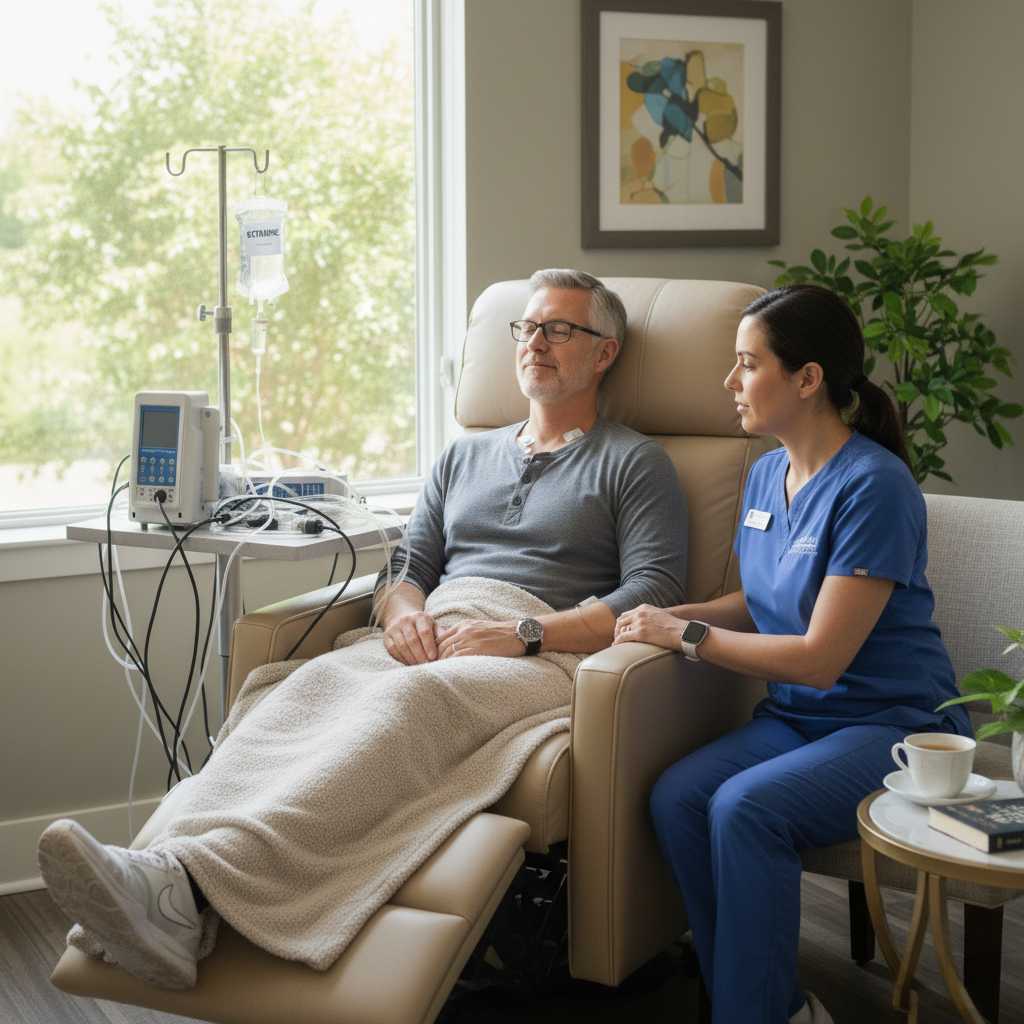
Stepping into Your Patients' Shoes
What truly differentiates this course from all others is the opportunity for clinicians to experience ketamine's profound effects themselves. By personally navigating the non-ordinary states of consciousness induced by ketamine, you'll gain invaluable insights into the patient experience.
This firsthand understanding enables you to prepare more effectively and better support your patients, reducing their anxiety and increasing treatment efficacy. No other training program offers this level of immersive learning, making it a critical component for clinicians who aim to provide the highest standard of care.
Experience Ketamine Firsthand and Transform Your Practice
By combining this direct experience with the extensive didactic knowledge and hands-on, supervised clinical training provided in the course, clinicians gain invaluable insights that are critical for developing the competence and expertise necessary to accurately assess the appropriateness of, and tailor the application of, ketamine therapy for their patients. This unique, immersive approach sets this program apart, providing an essential foundation that no ketamine infusion training offers.
The Key Benefits You'll Gain Can Be Invaluable:
Framing the Ketamine Experience
• Framing the Ketamine Experience sets the stage for a therapeutic journey with clear intentions and expectations, whether it's for treating depression, managing pain, or exploring psychological states. Clinicians who have personally experienced ketamine's effects are better equipped to guide their patients, helping them mentally and emotionally prepare. This firsthand understanding allows clinicians to reduce patient anxiety and increase receptiveness to and the effectiveness of treatment.
Valuable Tips for Beginning an Infusion Session
• Starting an infusion session correctly is crucial for safety and maximizing outcomes. Clinicians who have undergone the infusion themselves understand the importance of creating a calm, supportive environment. Their experience enables them to establish rapport quickly and effectively, set up the infusion accurately, and address any patient concerns, ensuring the session begins on the right foot.
Visual, Kinesthetic, and Somatic Processing
• Ketamine often heightens sensory perceptions, such as visual imagery, bodily awareness, and emotional responses. Clinicians who have experienced these effects can better support their patients by tailoring the therapeutic environment and providing guidance through intense sensations. This insight helps them create a more personalized and effective treatment experience.
Experiencing Dissociation
• Dissociation, where patients may feel detached from their body or reality, is a key effect of ketamine. Clinicians who have experienced this can better prepare patients, explaining what to expect and how to navigate it. This personal understanding allows clinicians to ensure dissociation becomes a safe, therapeutic part of the process rather than a source of anxiety.
Time and Space Expansion
• Ketamine can alter perceptions of time and space, making them feel fluid and expansive. Clinicians who have experienced these shifts can help patients understand and embrace them, turning what might be disorienting into a therapeutic tool for gaining new perspectives.
Non-linear Thought
• Ketamine can disrupt linear thinking, leading to what appears to be fragmented, non-sequential thoughts. Clinicians who have experienced this can guide patients through these cognitive shifts, helping them find meaning in the ketamine space and uncover new insights, rather than feeling overwhelmed by changes in thought patterns.
The Ketamine Continuum and Depth of Immersion
• Patients can experience varying depths of immersion during an infusion, from mild perceptual changes to deep states of consciousness. Clinicians who have explored these depths can better assess and modulate the experience for their patients, ensuring the therapy is tailored to their specific needs and therapeutic goals.
The Spacious Present
• The "spacious present" is where patients feel fully immersed in the moment, free from past and future concerns. Clinicians who have entered this state themselves can guide patients to embrace this therapeutic space, where significant emotional and psychological healing can occur.
Debriefing and Integration Techniques
• Debriefing and integration are critical for processing the experiences and insights gained during an infusion. Clinicians who have undergone this process can better help patients articulate their experiences and integrate them into their lives, enhancing the lasting impact of the therapy.
Returning from the Experience
• Guiding patients back to ordinary consciousness after an infusion is a delicate process. Clinicians who have experienced this transition understand the importance of a gentle, supportive approach that helps patients feel grounded and ready to integrate the experience.
Post-infusion Phenomena
• Post-infusion effects like mild dissociation or new insights are common. Clinicians who have experienced these phenomena can provide better care by reassuring patients and helping them navigate the residual effects, thereby maximizing therapeutic benefits.
Learning from Insights Gained to Adjust Subsequent Infusion Sessions
• Each ketamine session offers insights that can improve future treatments. Clinicians who have experienced ketamine themselves can better help patients reflect on their experiences, adjusting future sessions to meet evolving needs for more effective, personalized outcomes.
Why This Course Exceeds Expectations
This training program is unparalleled in its comprehensive approach, combining rigorous clinical practice with deep personal experience. By the end of Days 2 and 3, you'll have the technical skills and the empathetic understanding needed to excel in ketamine therapy. This unique blend of knowledge and experience
Click here to go on to day 3 of training
Here's What Our Graduates Have To Say
"Thank you again for an informative, enlightening, and practical course! Christy and I thoroughly enjoyed our experience with you, and we are excited to get all of our ducks in a row to get started with the ketamine infusions for mood disorders.
We appreciate your offer to send your forms/documents in a PDF as this will give us a great start in providing the right documentation, consent, etc… which, interestingly, our malpractice carrier is requesting. (I guess PA is not as progressive as FL.)
The course was fantastic….exactly what I was hoping for….evidence-based, scientifically yet practically oriented…allowing us to not only understand the basics of these treatments but also some insights as to improve our successes and minimize the “failures” through careful patient selection and optimization.
I am looking forward to applying what we have learned to improve the lives of those in our community who qualify for this treatment and approach! We again thank you for the opportunity and look forward to staying in touch!"
—Theresa Burick, MD - Integrative Medicine Specialist
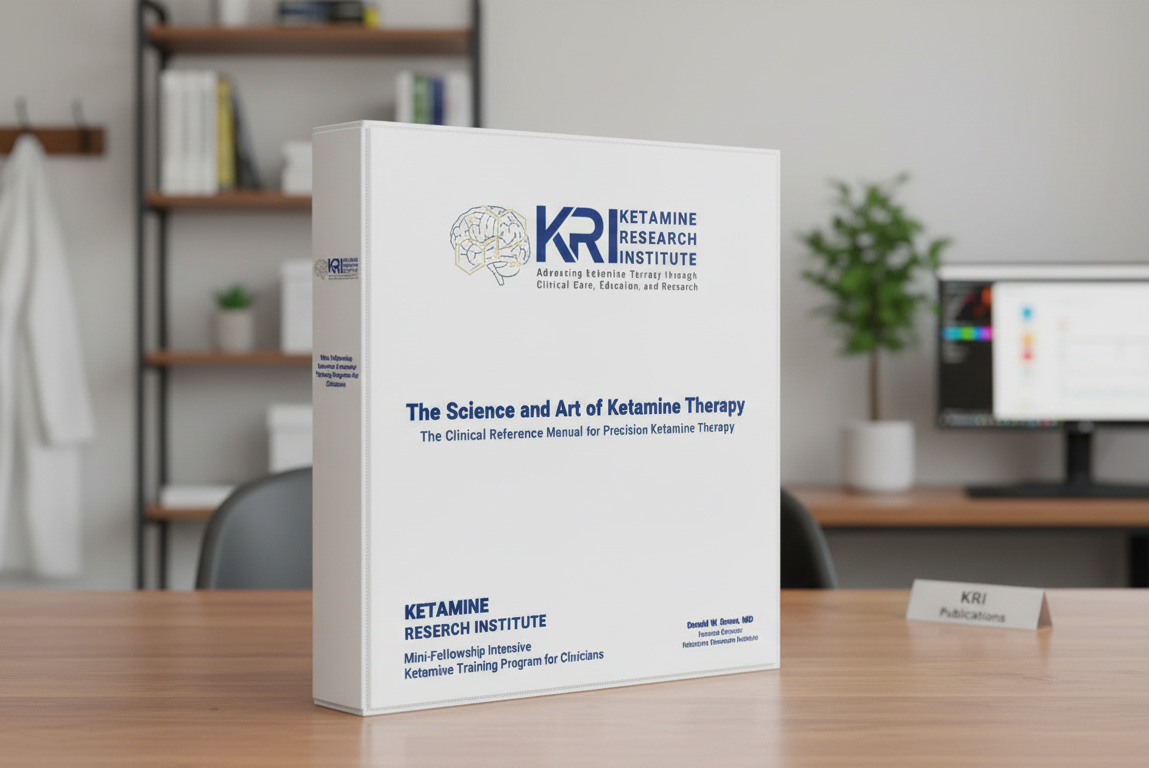
To Learn More About Our Programs - please click the links below:
The "Mini-Fellowship" Intensive Training Program
A Detailed Course Overview
Day 1: Essential Foundations for Ketamine Therapy
Day 2: Mastering the Future of Ketamine Therapy
Day 3: Personalization and Precision in Ketamine Therapy
Our Course Schedule and How To Apply For Training
The Origin of Our Ketamine Training Program
What Our Graduates Say About The Course
How the Ketamine Research Institute Training Program Complies with APA and ASA Recommendations