
Chronic pain
Ketamine infusion therapy for chronic pain
Chronic pain is not one condition, and the evidence for ketamine is not one answer. For a few kinds of pain it is reasonably well supported. For most, it is not. This page tells you which is which before you spend anything.
Start here
Not one condition, and not one answer
Nerve pain after shingles. A limb that never settled after an injury. Widespread pain with normal scans. Pain after a spinal cord injury. These get filed together as chronic pain, and they are not the same problem. They do not respond to the same things, and the research behind each one is a different size and a different quality.
So the useful thing a page like this can do is not to tell you that ketamine works. It is to tell you where your own diagnosis sits, because that is what decides whether an infusion is worth your time and your money.

The first question is always which kind of pain we are dealing with.
Before the label, the mechanism
What kind of pain is it?
Pain medicine sorts chronic pain into three broad kinds, and for this decision the kind matters more than the name of your diagnosis.3
- Nociceptive — pain driven by damage or threatened damage to tissue. A joint wearing out, an inflamed tendon, a fracture healing. The pain system is working normally and reporting a real problem
- Neuropathic — pain caused by damage or disease affecting the nerves themselves. Shingles, diabetic neuropathy, a nerve injured during surgery
- Nociplastic — pain that persists because the nervous system’s own processing has changed, without damage that accounts for it. Fibromyalgia is the clearest example
Ketamine acts centrally, on the signaling involved in how pain is processed, rather than on damaged tissue. That is why the mechanism matters more than the label, and it is why we go to some lengths to characterize and classify your pain before recommending an infusion at all.
Chronic neuropathic and nociplastic pain syndromes are where we have seen the best results here. That is a clinical observation rather than a study: it has no control group, it was not collected or analyzed as research, and it has not been peer reviewed. It is not a rate, and it is not a prediction of what will happen for you.
Where the classification points the other way, we say so. If your pain is primarily nociceptive, or if you have a new or worsening pain on top of a long-standing one, we will tell you that an infusion may not be the right treatment for you, and explain why. Pain that has recently changed usually needs a diagnosis before it needs a drug, and treating tissue damage centrally rarely addresses what is actually going on.
The published evidence
What the guideline found, condition by condition
In 2018 a panel drawn from three pain and anesthesia organizations reviewed the published trials of intravenous ketamine for chronic pain and graded the evidence separately for each condition.1 It is the most thorough review of its kind. It is not flattering across the board, and we would rather you read it here.
- Complex regional pain syndrome — the strongest of the group. Moderate evidence, graded B, supporting improvement in pain for up to twelve weeks
- Spinal cord injury pain — weak evidence, graded C, for short-term improvement
- Mixed neuropathic pain, phantom limb pain, postherpetic neuralgia, fibromyalgia, cancer pain, ischemic pain and migraine — weak or no evidence, graded D
- Low back pain — the guideline describes the supporting evidence as purely anecdotal
It does not mean an infusion cannot help you. Weak evidence means the studies are too few, too small or too mixed to settle the question, not that the answer is known to be no. But it does mean that anyone promising you a result is going beyond what is known, and that you should treat a course as something to try and measure rather than something to count on.
Where that leaves the decision
What we will tell you when you call
We will tell you which of those groups your diagnosis falls into. If it is CRPS, the evidence is on firmer ground and there is a separate page that goes through it properly, including what the relief is for and how long it tends to last.
If it is one of the conditions with weak evidence, we will say so, and then the conversation is about whether a trial of treatment is worth it to you anyway. Sometimes it is. People who have worked through the usual medications and procedures without getting their lives back are entitled to try something with an uncertain answer, as long as nobody is pretending the answer is certain.
What we will not do is take you on without telling you where you stand.
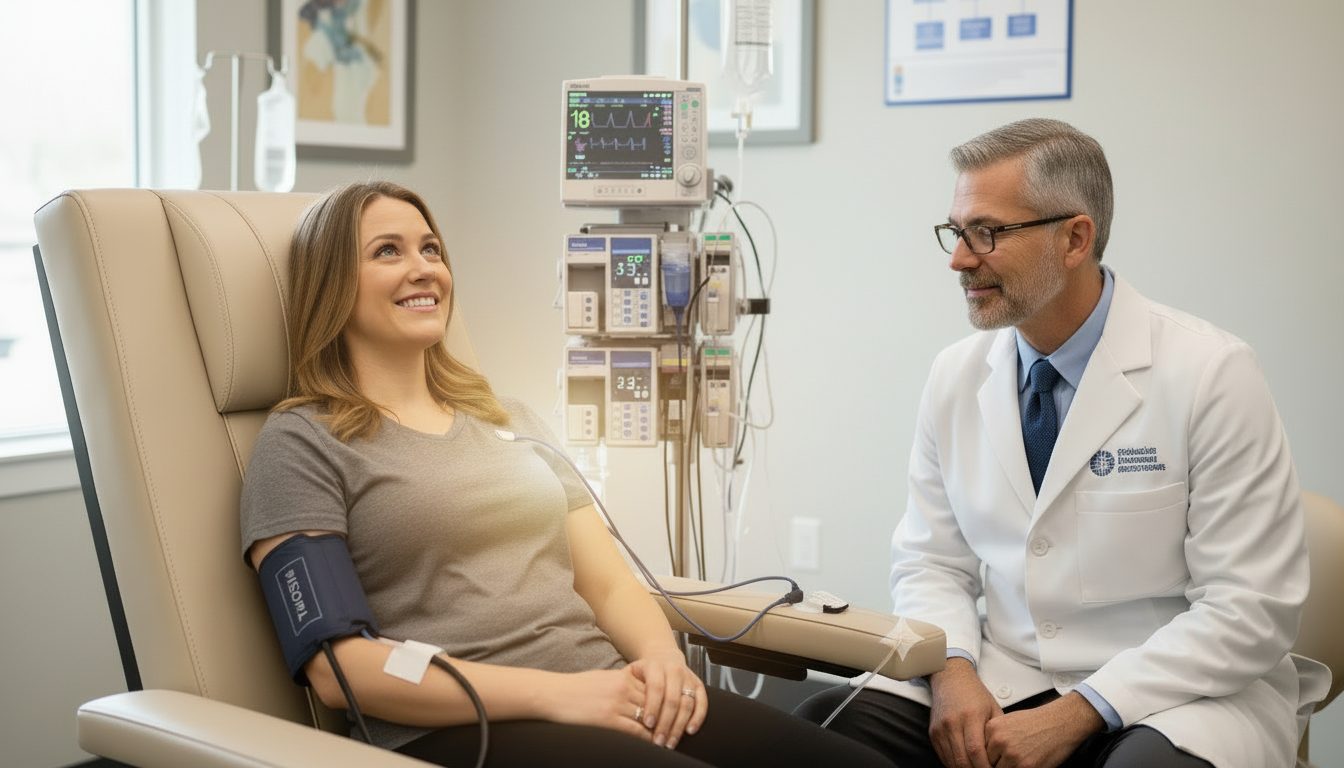
A defined course, with a defined point at which we stop and reassess.
How we measure it
A trial you can actually judge
A course of infusions is worth doing only if you can tell afterward whether it did anything. That sounds obvious. It is the part most often skipped.
We score your pain on a validated rating scale before treatment and again afterward, and whether a further course is offered, and when, is decided by that score rather than by a fixed monthly cycle. If the number has not moved, we will tell you, and we will not book you for more on the theory that the next one might.
In most of the conditions above, where an effect has been shown at all, it has been measured in weeks rather than months. Repeat courses are common. That is worth knowing before you start rather than after the first one wears off.
The course
How a RESTORE course is given
Side effects during the infusion are common and short-lived: a dissociative or dreamlike feeling, dizziness, changes in hearing or vision, sometimes nausea. They settle as the infusion is tapered and the medication clears. The safety page sets out the risks and the limits in full, including what is known about repeated courses.
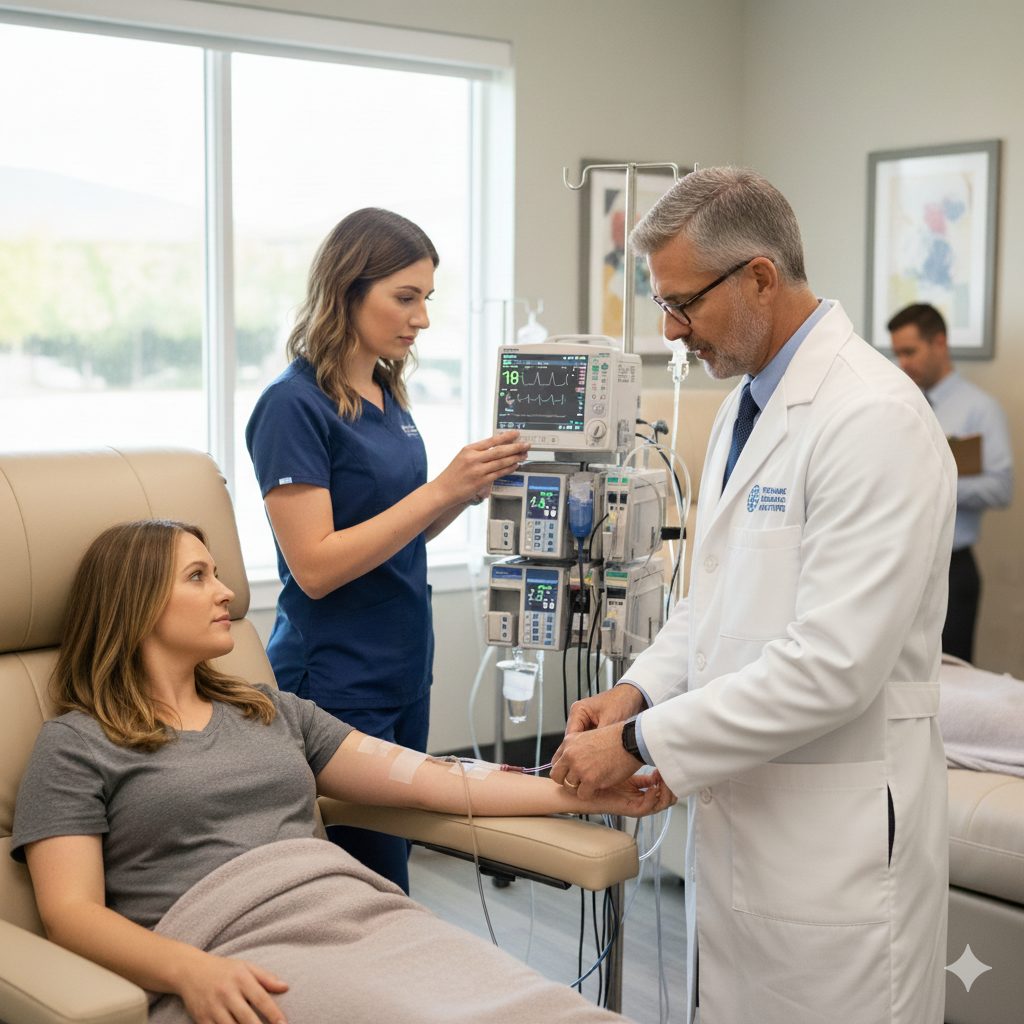
Monitoring runs throughout, and the record from each day shapes the next.
Whether to ask
Whether this is worth a conversation
It may be worth asking about if you have a diagnosis rather than an unexplained symptom, you have worked through the medications and procedures your physician has offered, and you want a clear answer about where your condition sits in the evidence before you decide.
It is less likely to be the right move if your pain has not yet been properly worked up, or if the things with better evidence behind them have not had a fair run.
It does not help everyone, and we cannot tell in advance who it will not help. If it is not working for you, we will say so early rather than sell you a further course.
References
1. Cohen SP, Bhatia A, Buvanendran A, et al. Consensus guidelines on the use of intravenous ketamine infusions for chronic pain. Reg Anesth Pain Med. 2018;43(5):521–546. PMID 29870458.
2. Connolly SB, Prager JP, Harden RN. A systematic review of ketamine for complex regional pain syndrome. Pain Med. 2015;16(5):943–969. PMID 25586192.
3. Kosek E, Cohen M, Baron R, et al. Do we need a third mechanistic descriptor for chronic pain states? Pain. 2016;157(7):1382–1386.
Related pages
CRPS and RSD Fibromyalgia Are You a Candidate? Safety, Risks and Limits Fees
Talk to us
Not sure whether this is worth a conversation?
Tell us your diagnosis and what you have already tried, and we will tell you where it sits in the evidence and whether a course is likely to be any use to you.
RESTORE — ketamine therapy, done precisely.