
Complex regional pain syndrome
Ketamine infusion therapy for CRPS and RSD
CRPS pain does not behave like ordinary pain, and most of the medications offered for it were designed for something else. Ketamine acts on a different system. This page sets out what the published trials found, what they did not find, and how an infusion course is used here.
What you are dealing with
A pain that outlasts the injury
CRPS usually begins after an injury, sometimes a small one, and then refuses to follow the injury’s timetable. The pain is often burning or electrical. Light touch, clothing or a draft of cold air can set it off. The limb may change color or temperature, swell, sweat, or grow stiff.
What follows is the part that does the lasting damage. Because the limb hurts to move, it gets moved less. A limb that is used less becomes stiffer and weaker, and a stiff, weak limb hurts more when it is finally used. The cycle tightens on itself, and it can run for years.
Breaking that cycle is the whole problem. It is also why the timing of pain relief matters as much as the amount of it.
CRPS is not the ordinary tissue-damage kind of pain. Type 2 follows an identified nerve injury; type 1 does not, and is better understood as a change in the way the nervous system itself processes pain. That is the distinction that makes a centrally acting drug worth asking about at all, and it is set out in full on the chronic pain page.
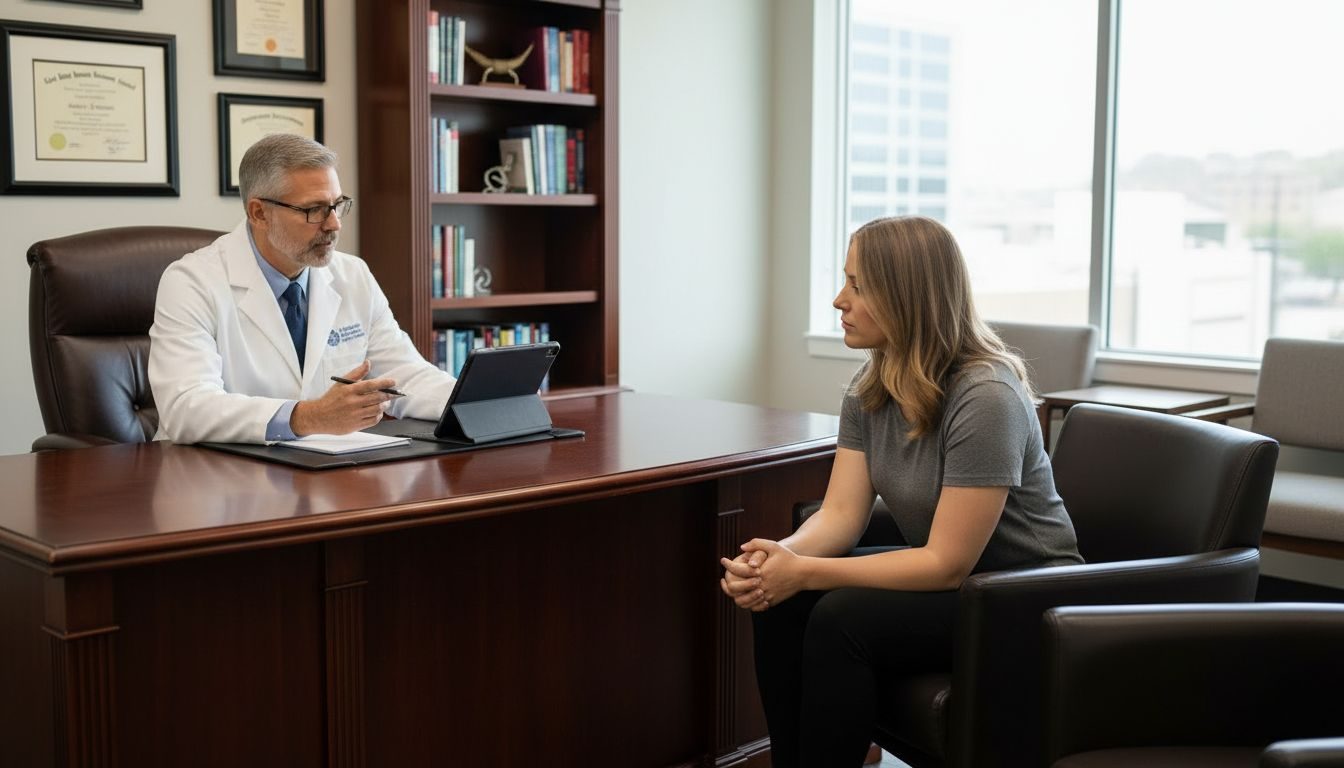
Every course begins with a consultation and a review of your records.
The published evidence
What the trials actually found
Five controlled trials of ketamine for CRPS have been published, and all of them are small. We would rather you read what they show here than come across it somewhere else later.
The largest, a controlled trial of 60 people, found a clear effect early: average pain of 2.68 on ketamine against 5.45 on placebo at one week, a difference very unlikely to be chance (p<0.001). The follow-up ran to twelve weeks, and by that point the difference was no longer statistically significant (p=0.07).1,2
A secondary analysis of that same trial asked whether the limb actually moved better. Pain fell; measured movement did not significantly improve.3 A second trial, of 19 people, reported relief across twelve weeks, but it was a pilot, too small to settle the question, and it did not show a gain in quality of life.4
It concludes that there is only weak evidence supporting the efficacy of ketamine for CRPS, and that ketamine cannot be considered a first-line option.1 A later multi-society guideline, which graded each chronic pain condition separately, read the same trials more favorably: it rated CRPS the strongest of the group, with moderate evidence supporting improvement in pain for up to twelve weeks.5 Taken together, CRPS is the best supported of the chronic pain conditions and still some way short of settled. Nothing on this page is meant to talk you past that.
How we use it
What the window is for
Read those trials closely and you notice what they were built to measure: the effect of an infusion on its own. None of them was designed to test an infusion paired with a structured rehabilitation program. They answer the question how long does the drug’s own effect last. They do not answer the question what can be done while it lasts.
The second question is the one we plan around. Several weeks of lower pain is not a cure, but it is an opening: pain low enough that physical therapy becomes tolerable, that the limb can be moved, loaded and desensitized, that the disuse half of the cycle can finally be worked on directly.
So the infusion is treated as the thing that makes the work possible, not as the work itself. We ask that you have a physical therapist or a referring physician lined up before you come, and we coordinate with them so that the weeks afterward are used rather than waited out.
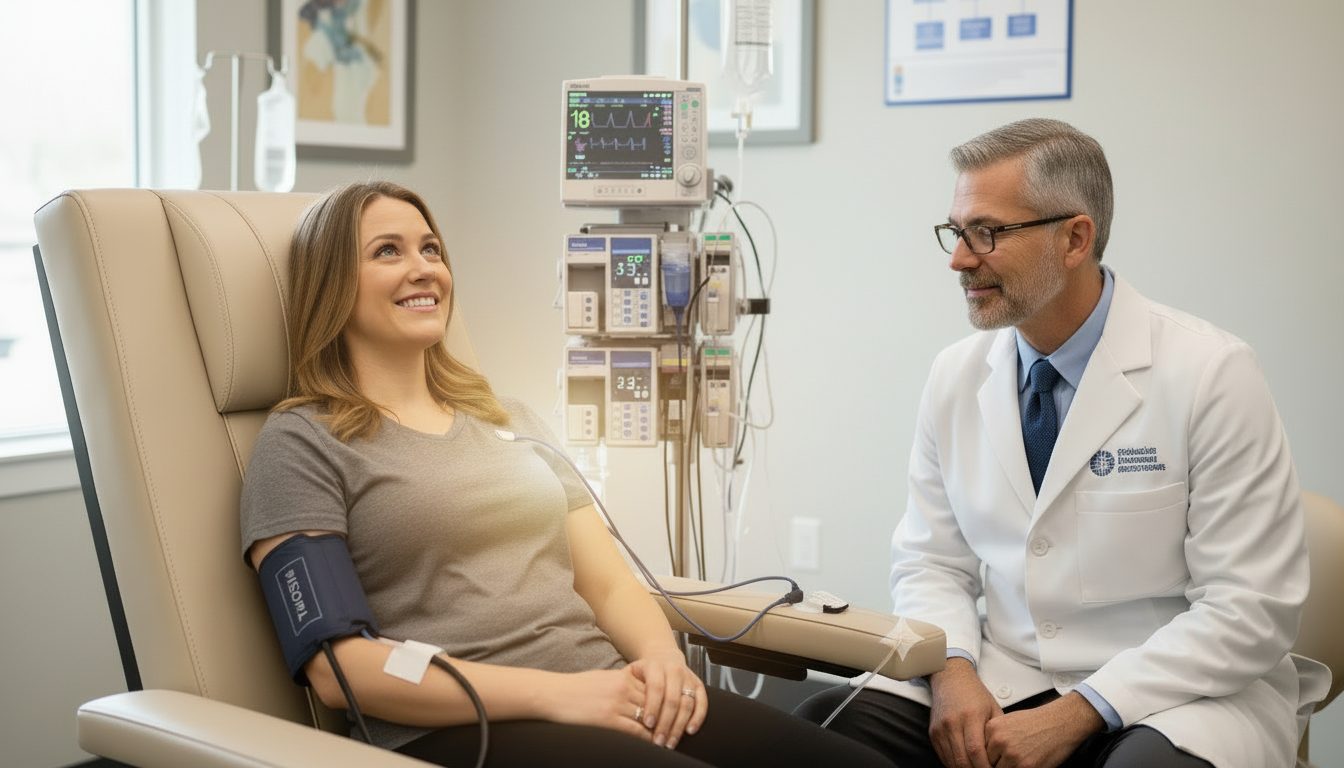
The infusion is the opening. What is done with the weeks that follow is the treatment.
Our own experience
What we have seen here
In our own practice we have seen improvement that persisted well beyond the weeks described in the published trials, and in some people long after the infusions ended.
It has no control group, it has not been collected or analyzed as research, and it has not been peer reviewed. It is not a rate, and it is not a prediction of what will happen for you. We include it because we think you should have both: what the literature reports, and what we see.
If there is an explanation for it, we think it is the section above rather than anything mysterious. What gets done inside the window tends to outlast the window. That is a reason to plan the weeks after treatment carefully. It is not a promise about how yours will go.
The course
How a RESTORE course is given
Whether a further course is needed, and when, is decided by your score on a validated rating scale rather than by a fixed monthly cycle. Relief from a single course is often temporary, and repeat courses are common in CRPS. We will tell you what we think you are likely to need before you start rather than after.
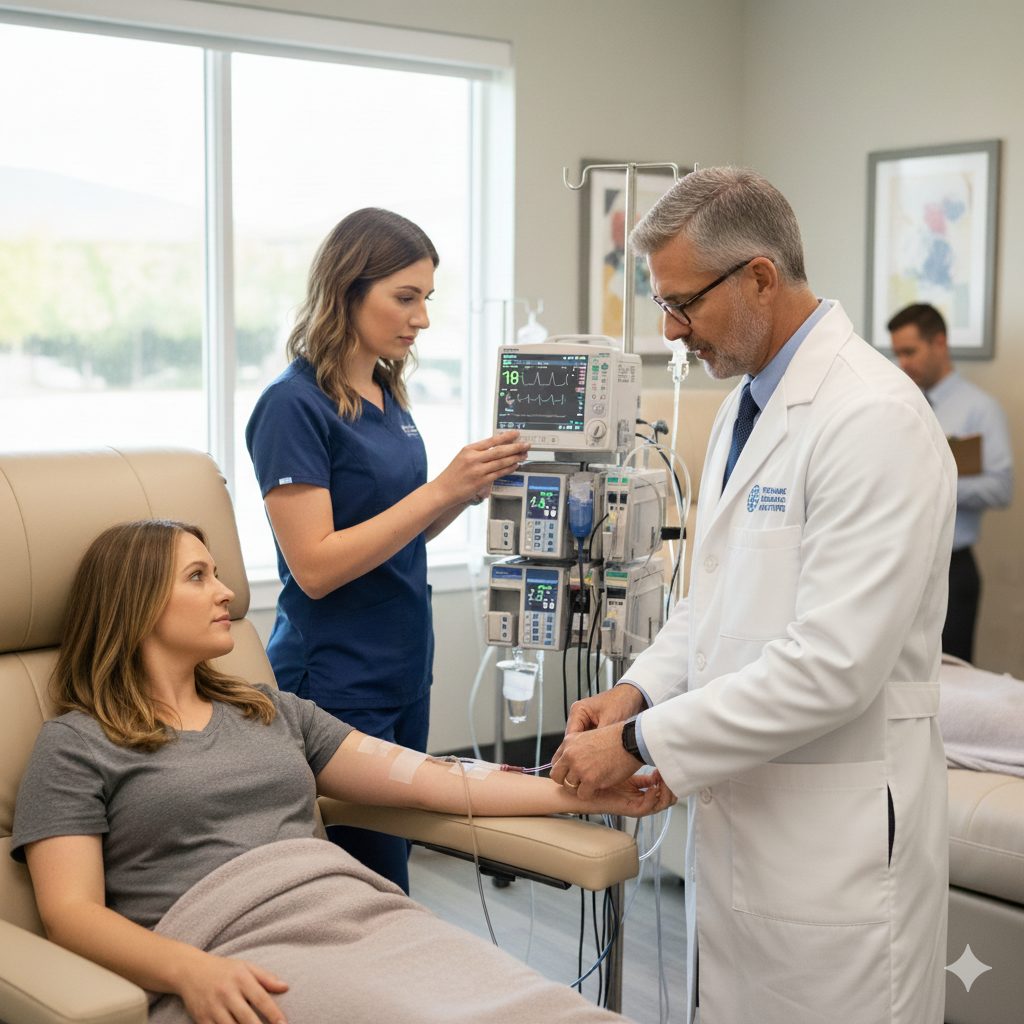
Monitoring runs throughout, and the record from each day shapes the next.
Whether to ask
Whether this is worth a conversation
It may be worth asking about if you carry a diagnosis of CRPS or RSD, your pain has not been controlled by the usual medications and blocks, and you are able and willing to work with a therapist during the weeks after treatment.
It is less likely to be the right move if the plan is an infusion on its own with nothing arranged for afterward. On the evidence above, that is the version most likely to fade.
It does not help everyone, and we cannot tell in advance who it will not help. If it is not working for you, we will say so early rather than sell you a further course.
References
1. Connolly SB, Prager JP, Harden RN. A systematic review of ketamine for complex regional pain syndrome. Pain Med. 2015;16(5):943–969. PMID 25586192.
2. Sigtermans MJ, van Hilten JJ, Bauer MCR, et al. Ketamine produces effective and long-term pain relief in patients with complex regional pain syndrome type 1. Pain. 2009;145(3):304–311. PMID 19604642.
3. Schilder JCM, Sigtermans MJ, Schouten AC, et al. Pain relief is associated with improvement in motor function in complex regional pain syndrome type 1: secondary analysis of a placebo-controlled study on the effects of ketamine. J Pain. 2013;14(11):1514–1521. PMID 24075073.
4. Schwartzman RJ, Alexander GM, Grothusen JR, et al. Outpatient intravenous ketamine for the treatment of complex regional pain syndrome: a double-blind placebo controlled study. Pain. 2009;147(1–3):107–115.
5. Cohen SP, Bhatia A, Buvanendran A, et al. Consensus guidelines on the use of intravenous ketamine infusions for chronic pain. Reg Anesth Pain Med. 2018;43(5):521–546. PMID 29870458.
Related pages
The RESTORE Method Are You a Candidate? Safety, Risks and Limits Our Results Fees
Talk to us
Not sure whether this is worth a conversation?
We will go through your history and your therapy plan and tell you honestly whether an infusion course is likely to be any use to you.
RESTORE — ketamine therapy, done precisely.