
Depression and mood
Depression that hasn’t responded yet
Most antidepressants take six to eight weeks to tell you whether they are working. This tells you in days.
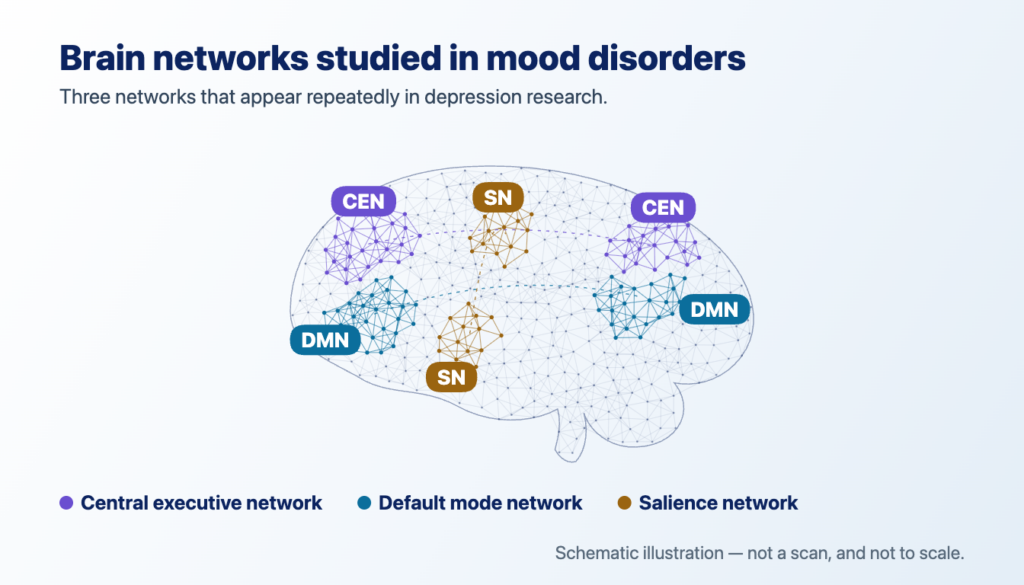
Where this starts
Why another two-month trial is a hard thing to ask
If you are reading this, you have probably already tried more than one antidepressant, and perhaps therapy and other treatments as well. Each of those asks for six to eight weeks before it will tell you whether it was worth it. After several rounds the arithmetic itself becomes discouraging — years can go by in trials.
The numbers behind that experience are not encouraging either. In the largest study of antidepressant treatment in ordinary practice, 28% of patients reached remission on the first medication they were given [1]. The figure usually quoted for the full sequence of up to four medications is 67%; a reanalysis of the same patient-level data, run to the original protocol, put it at 35% [2], and the original investigators dispute that reanalysis [3]. We give you both because the honest position is that the true figure sits somewhere in a wide range — and that a great many people are not helped by the first thing they try.
Response means a score on a validated depression scale that fell by at least half from where it started. Remission means it fell into the range the scale treats as minimal symptoms — a higher bar, and always the smaller of the two numbers. More on how to read these figures.
Ketamine differs in one specific way that matters here: where it helps, it usually helps quickly. That is not a promise that it will help you. It is a reason the waiting is shorter.
How it works
A different system
Most antidepressants act on serotonin or noradrenaline. Ketamine does not. It blocks one of the receptors glutamate acts on — the NMDA receptor — and the antidepressant effect is thought to follow downstream, in the way synapses signal and connect.
The mechanism is not settled, and anyone who tells you it is settled is ahead of the evidence. What is established is that the route is different from the drugs you have already tried. That is the reason it is sometimes worth trying when they have not worked.
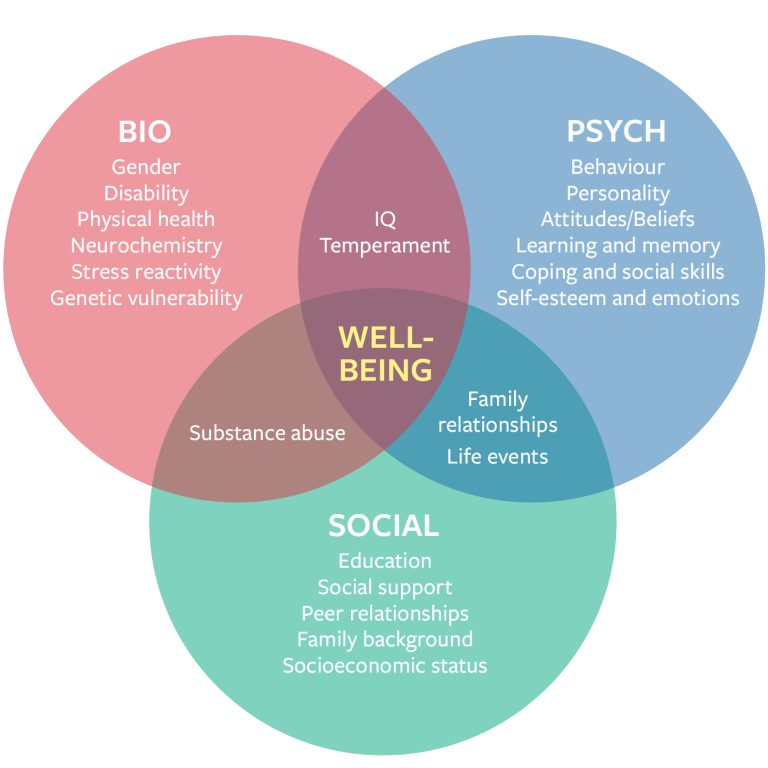
Depression is not one thing. The biology is one part of a larger picture, and ketamine addresses that part.
The course
What happens, and how quickly you will know
Three infusions over three consecutive days, dosed to a measured target concentration in your blood rather than to your body weight.
Where ketamine helps, improvement is often measurable within hours rather than the weeks conventional antidepressants take. You are scored on a validated scale before treatment and again afterward, so whether it is working has an answer rather than an impression.
It does not help everyone, and we cannot tell in advance who it will not help. If it is not working for you, we will say so early rather than sell you a further course.
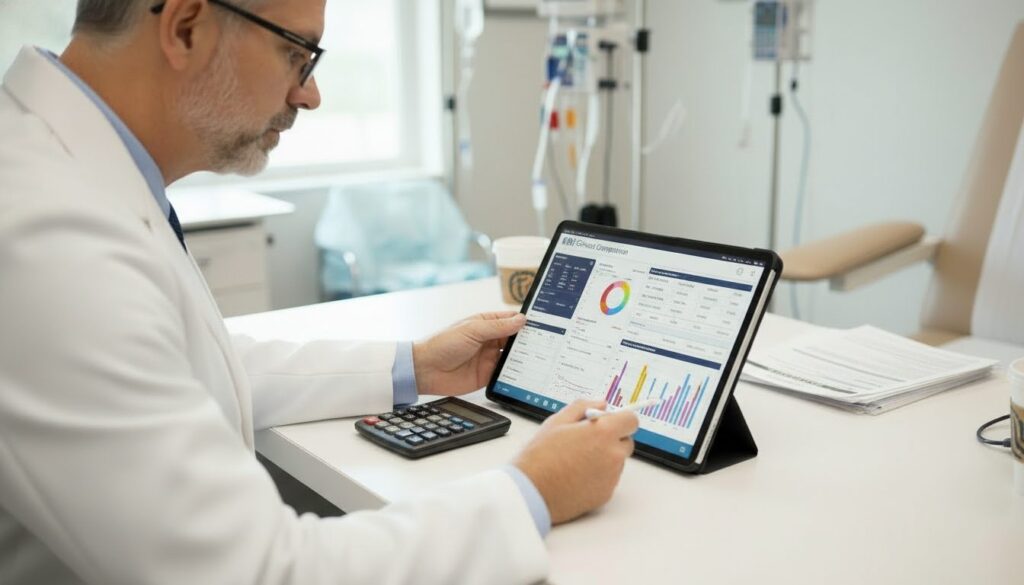
Your score before and after, on the same scale, read by the physician treating you.
Bipolar depression
Bipolar depression is a different question
The evidence here is newer and thinner than it is for unipolar depression, and the durability is not established. That is worth saying plainly before anything else.
A randomised, double-blind trial published in September 2026 treated 68 patients with treatment-resistant bipolar depression — four infusions over two weeks, against midazolam, alongside a stable mood stabiliser. Depression scores fell further on ketamine, by 7.3 points on the MADRS scale [4]. It is the first properly controlled trial of a course of infusions in bipolar depression rather than a single one.
What it does not tell us is how long that lasts. The trial measured to day 14 and stopped. Earlier uncontrolled work found improvements returning to baseline within one to two weeks of the last infusion [5]. So a course may help; we cannot tell you it will still be helping in six months, and we will not pretend otherwise.
Ketamine can trigger a switch into mania or hypomania in people with bipolar disorder. It is uncommon: the randomised trial above recorded no cases, and in ten years of treating patients here it has happened twice. Both were short-lived, and both were managed together with the patient’s own psychiatrist. We tell every bipolar patient about this before treatment, and we ask that your psychiatrist stays involved while you are treated.
Anxiety
Anxiety, honestly
Anxiety symptoms often ease alongside depression in people who respond, and patients frequently tell us so. The direct evidence is weaker than that experience suggests. A meta-analysis of six controlled trials found a reduction in anxiety that did not reach statistical significance, and rated the quality of the evidence as low; in most of those trials anxiety was a secondary measure rather than the thing being tested [6].
So we will treat depression and watch what happens to your anxiety. We will not tell you that ketamine is a treatment for an anxiety disorder, because the evidence does not support that claim.
Whether it fits
Whether it is worth a conversation
If you have depression that has not responded to medication or other treatment, this may be worth discussing. In a retrospective review of our own patients, the mean interval before a further infusion was needed was about eight months. That review was retrospective, uncontrolled and not peer reviewed, and it is not a prediction of your result.
Not everyone needs this. If your depression is recent, mild, or has not yet been treated with the usual approaches, those come first — and we will tell you so.

References
1. Trivedi MH, Rush AJ, Wisniewski SR, et al. Evaluation of outcomes with citalopram for depression using measurement-based care in STAR*D: implications for clinical practice. Am J Psychiatry. 2006;163(1):28–40. PMID 16390886.
2. Pigott HE, Kim T, Xu C, Kirsch I, Amsterdam J. What are the treatment remission, response and extent of improvement rates after up to four trials of antidepressant therapies in real-world depressed patients? A reanalysis of the STAR*D study’s patient-level data with fidelity to the original research protocol. BMJ Open. 2023;13(7):e063095. PMID 37491091.
3. Rush AJ, Trivedi M, Fava M, Thase M, Wisniewski S. The STAR*D data remain strong: reply to Pigott et al. Am J Psychiatry. 2023. PMID 38037409.
4. Orsini DK, Di Luch S, Tomlinson G, et al. Serial ketamine infusions for treatment-resistant bipolar depression: a randomized clinical trial. JAMA Psychiatry. Published online 2 September 2026. doi:10.1001/jamapsychiatry.2026.2658.
5. Singh B, Nunez NA, Joseph B, et al. An update on the efficacy of single and serial intravenous ketamine infusions and esketamine for bipolar depression: a systematic review and meta-analysis. Brain Sci. 2023;13(12):1672.
6. Marchi M, Magarini FM, Galli G, et al. The effect of ketamine on cognition, anxiety, and social functioning in adults with psychiatric disorders: a systematic review and meta-analysis. Front Neurosci. 2022;16:1011103.
Related pages
The RESTORE Method Are You a Candidate? Safety, Risks and Limits Our Results Fees
Talk to us
Not sure whether this is worth a conversation?
We will go through your history and tell you honestly whether this is likely to be any use to you.
RESTORE — ketamine therapy, done precisely.