
Our programs
RESTORE Advanced
The course for chronic neuropathic and nociplastic pain. Three infusions over three days, a more concentrated preparation than the mood protocol, dosed to a measured target concentration in the blood.
Ketamine is FDA-approved as an anesthetic. It is not FDA-approved for chronic pain, and its use for that is off-label. Individual results vary and cannot be predicted in advance.
Who it is for
Pain that has not responded to the usual management
Fibromyalgia, peripheral neuropathy, and complex regional pain syndrome and RSD. What matters more than the label is the mechanism: ketamine acts centrally, so it is worth asking about in neuropathic and nociplastic pain, and much less so in pain driven by ongoing tissue damage.
We characterize and classify your pain before recommending a course. If it is primarily nociceptive, or if you have a new or worsening pain on top of a long-standing one, we will tell you this may not be the right treatment and explain why. The chronic pain page sets out that classification and what the published trials found for each condition.

One patient at a time, in a suite kept quiet for that reason.
We do not treat post-viral syndromes including long COVID, chronic fatigue syndrome, or irritable bowel syndrome. We are asked about all three. The evidence is preliminary and we do not offer treatment for them.
The course
What the program is
Each infusion is adjusted to how you responded to the one before it. The RESTORE Method sets out how the dosing is calculated and why.
What is included
Everything in the course
Before treatment
- Review of your medical records, prior laboratory studies and previous pain management
- Baseline scoring on validated pain, depression and anxiety scales
- Review of thyroid, testosterone or estrogen, vitamin D, B6 and B12, with further testing where indicated
- A full medicine review, and a conversation with your prescriber where something may interfere
The infusions
- Three sequential infusions, each adjusted to your own measurements and your response to the last
- Dosing set from your adjusted body composition, current medications and prior treatment history
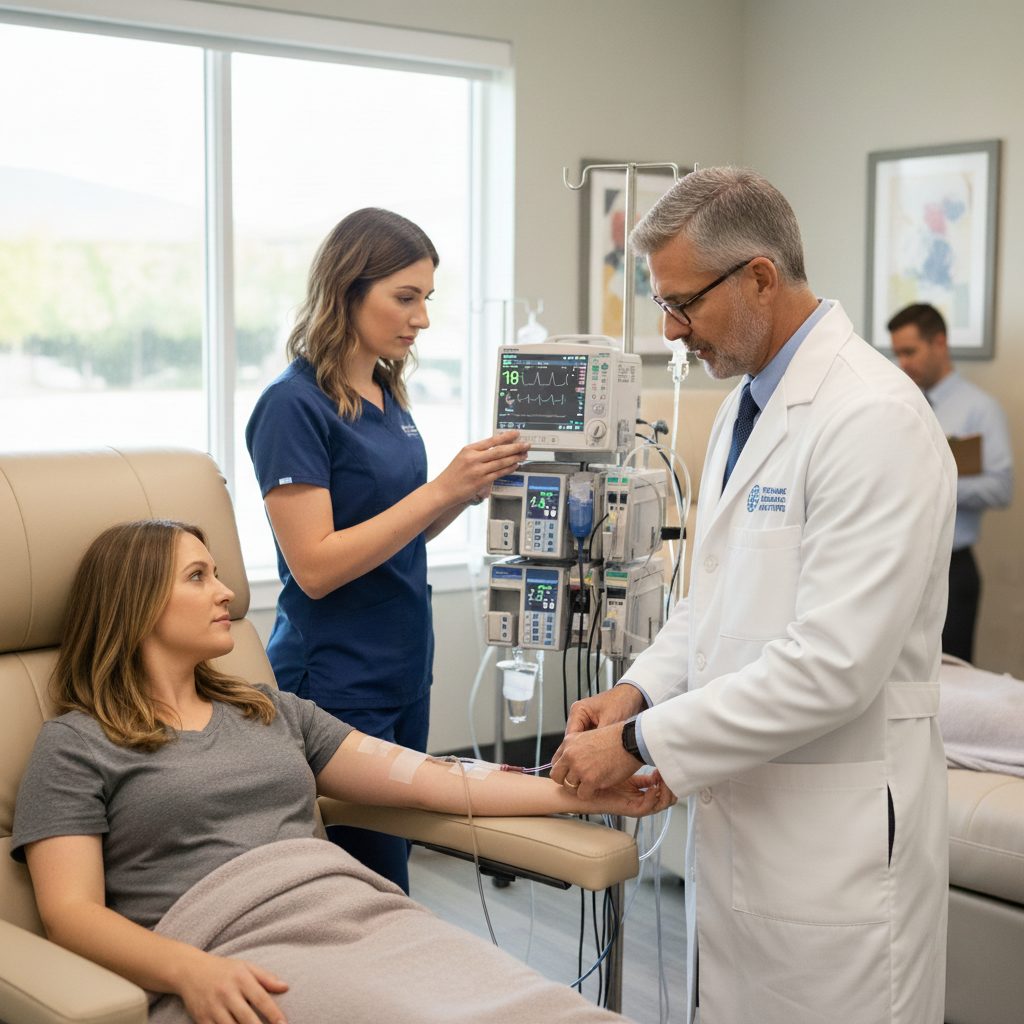
The rate is adjusted during the infusion, not set once and left.
Monitoring throughout
- A physician present with you for the whole infusion
- Heart rate and heart rate variability, ECG, blood pressure and oxygen saturation, measured continuously
- Infusion adjusted in response to what the monitors and you are showing
Afterward
- Post-infusion assessment by the physician who treated you, and reassessment between infusions
- The same pain scales repeated, so the result is measured rather than remembered
- Results sent to your physician or pain specialist if you would like
- The RESTORE supplement after the course, included in the fee
What to expect afterward
Relief from a single course is often temporary
This matters more in pain than it does in mood, and we would rather you read it here. In the controlled trials, where an effect was shown at all, it was usually measured in weeks rather than months, and repeat courses are common.1
After the first three infusions the usual pattern is two infusions at around three months and one at around six months. Whether you need them, and when, is decided by your score on a validated rating scale rather than by the calendar.
Several weeks of lower pain is an opening: pain low enough that physical therapy becomes tolerable and a limb can be moved and loaded. We ask that you have a therapist or referring physician lined up before you come, so the weeks afterward are used rather than waited out.
Cost
What it costs
We are not in network with insurance. The fees page sets out what is and is not included, and gives the expected first-year cost.
Straight talk
What this program is not
It is not a cure. For most of the pain conditions above the published evidence is weak — too few studies, too small, or too mixed to settle the question — and the chronic pain page sets out the grade the guideline gave each one.
It is not a replacement for the physician managing your pain, and it does not replace physical therapy. It is not available anywhere but Sarasota at present, which means travel for most people.
It does not help everyone, and we cannot tell in advance who it will not help. If it is not working for you, we will say so early rather than sell you a further course.
References
1. Cohen SP, Bhatia A, Buvanendran A, et al. Consensus guidelines on the use of intravenous ketamine infusions for chronic pain. Reg Anesth Pain Med. 2018;43(5):521–546. PMID 29870458.
The other programs
RESTORE Essential RESTORE Rescue Compare the options
Related pages
Talk to us
Is this the right program for you?
Tell us your diagnosis and what you have already tried, and we will tell you honestly whether this course is likely to help.
RESTORE — ketamine therapy, done precisely.