
Safety
Safety, risks, and what ketamine cannot do
Ketamine is FDA-approved as an anesthetic. It is not FDA-approved for depression, anxiety, PTSD, or chronic pain, and its use for those conditions is off-label.
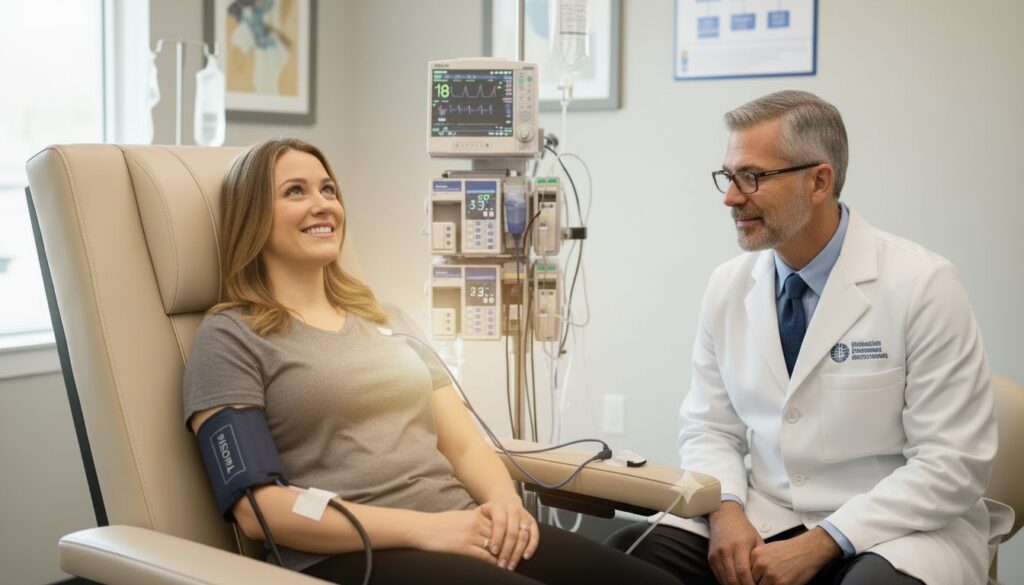
What it is
What ketamine is
Ketamine is an anesthetic, in clinical use since the 1960s and on the World Health Organization’s list of essential medicines. It is a Schedule III controlled substance [2]. We use it at sub-anesthetic doses — well below the dose used for surgical anesthesia — but it is a potent drug and it is regulated as one.
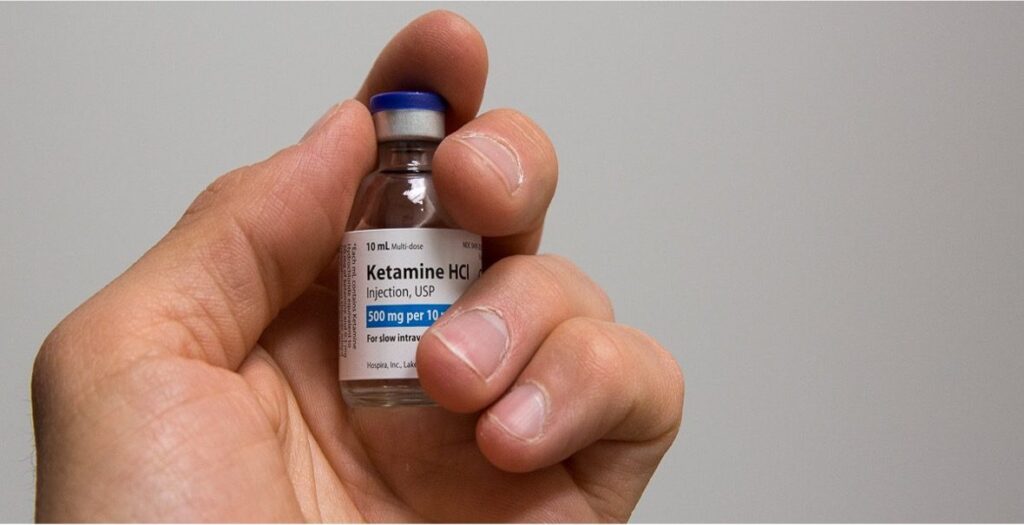
Ketamine as it arrives here: a vial of a generic anesthetic, given by infusion at a fraction of the surgical dose.
During and after
Common effects during and shortly after treatment
- Dissociation — a sense of detachment from your body or surroundings, and altered perception of time. This is expected and typically resolves within an hour of the infusion ending
- Transient increases in blood pressure and heart rate, which is one reason we monitor continuously
- Nausea, which we can prevent or treat
- Dizziness, blurred vision and unsteadiness for several hours
- Feeling emotionally raw or unusually tired the following day
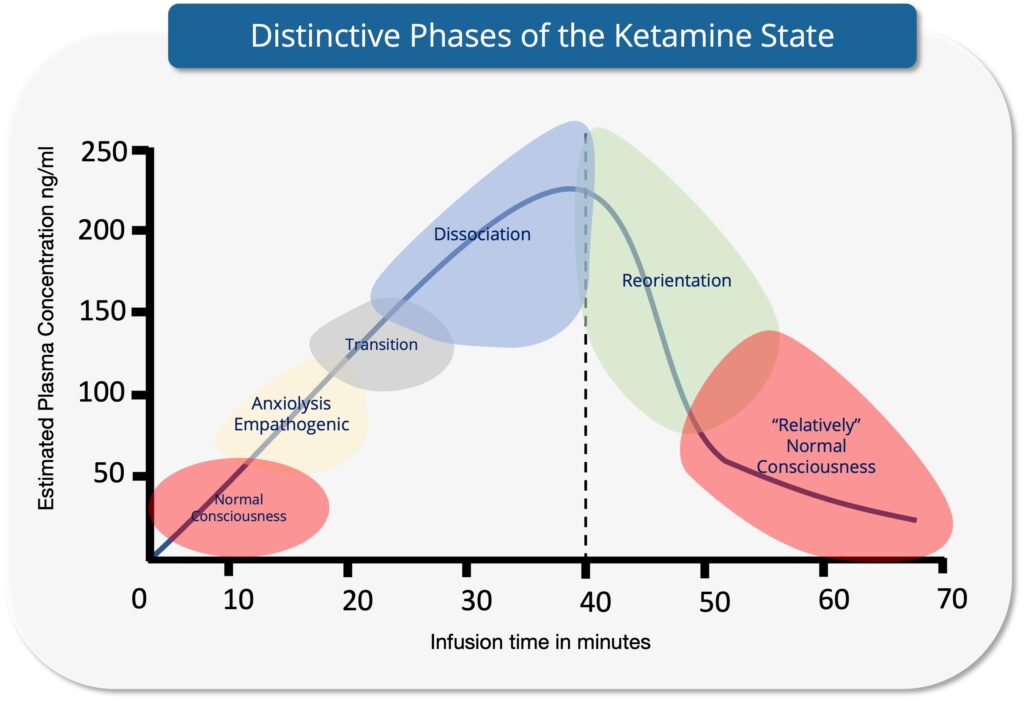
The phases of the ketamine state, plotted against plasma concentration. This is why the effects arrive, peak and fade on a predictable schedule, and why a session is timed the way it is.
Weigh these
Risks you should weigh
The FDA has identified abuse and misuse, psychiatric events, and increases in blood pressure among the known safety concerns with ketamine. In addition:
- Ketamine has recognized potential for misuse. This is why we administer it only in the office, under supervision, and do not prescribe any take-home formulation
- Long-term data on repeated sub-anesthetic infusion is limited. Frequent high-dose recreational use is associated with bladder and urinary tract injury and with cognitive effects; whether, and at what cumulative exposure, that becomes relevant to supervised therapeutic use is not established
- Liver injury has been reported after repeated courses. Three patients being treated for chronic pain developed drug-induced liver injury following a second prolonged infusion course, and all three recovered after treatment was stopped.4 We do not run liver tests on a fixed schedule. We check when something in your history, your medications, or how you are doing gives us a reason to
- Ketamine can precipitate or worsen psychotic symptoms in susceptible people
- The dissociative experience is distressing for some people
In community practice, not everyone improves — and a few get worse. The largest analysis of ketamine treatment outside research settings drew on 178 clinics across the United States. Among patients with both a before and an after score, 53.6% responded and 28.9% reached remission; 8.4% finished with higher depression scores than they started with, and 6.0% reported an increase in thoughts of suicide [3].
Response means a score on a validated depression scale that fell by at least half from where it started. Remission means it fell into the range the scale treats as minimal symptoms — a higher bar, and always the smaller of the two numbers. More on how to read these figures.
Those are real outcomes and you should know them before you begin. They are figures from community practice across the country, not ours — our own outcomes, and their limitations, are published on our results page.
No method removes the possibility, and we cannot tell you in advance which group you will fall into. That is why we score you on a validated scale before treatment and again afterward: without a measurement, a result like that can pass unnoticed.
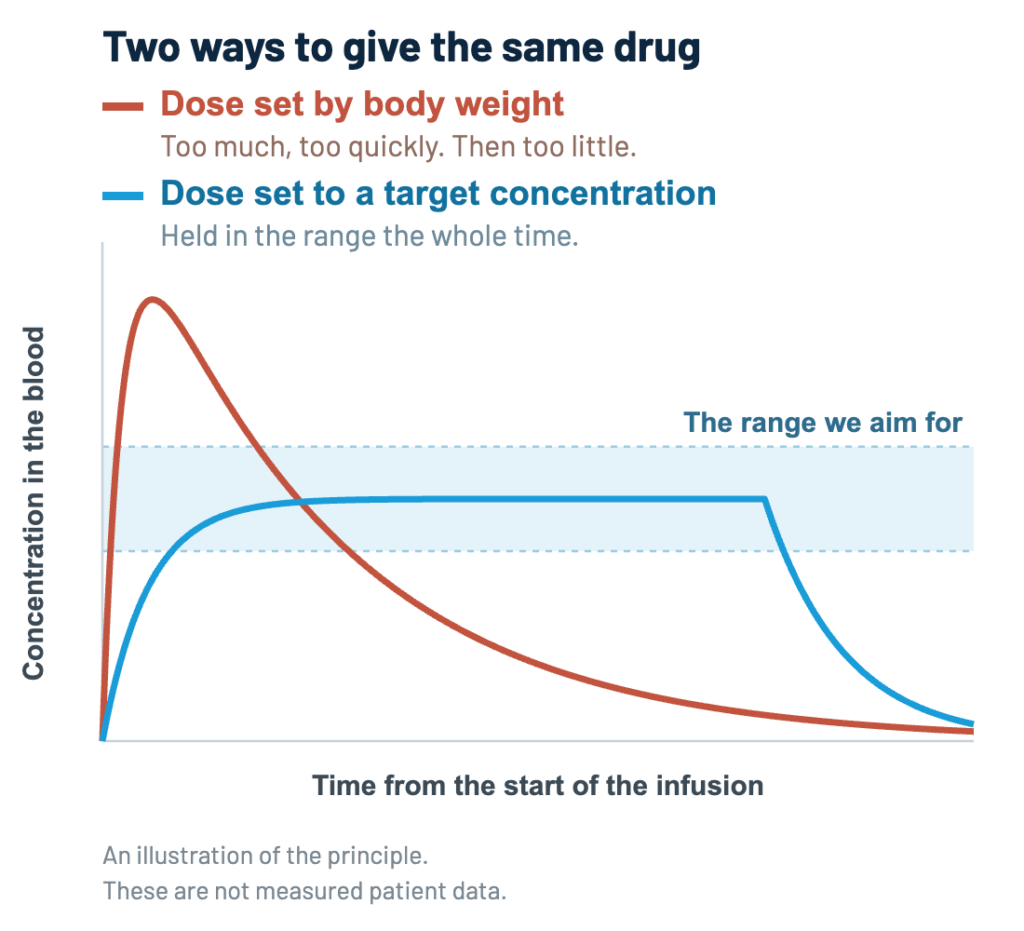
Two ways to give the same drug. The difference shows up in the curve, not the milligrams.
Limits
What ketamine cannot do
- It is not a cure. It is a treatment, and for most people who respond it is a treatment that needs maintaining
- It does not replace psychiatric care, psychotherapy, or your medication. We work alongside those; we do not substitute for them
- It does not work for everyone. A proportion of people get no benefit at all, and we cannot identify in advance who they will be
- It is not FDA-approved for any psychiatric condition or for chronic pain
Monitoring
Safety and monitoring
A physician stays with you. Not nearby, not on call — in the room for the whole of the active infusion and the early part of recovery.
Ketamine is an anesthetic. At the doses used to treat depression and pain it changes consciousness, it moves blood pressure and heart rate, and it can affect the reflexes that protect your airway. So it is watched the way an anesthetic is watched, and the person who can act on what the monitors show is already in the room.
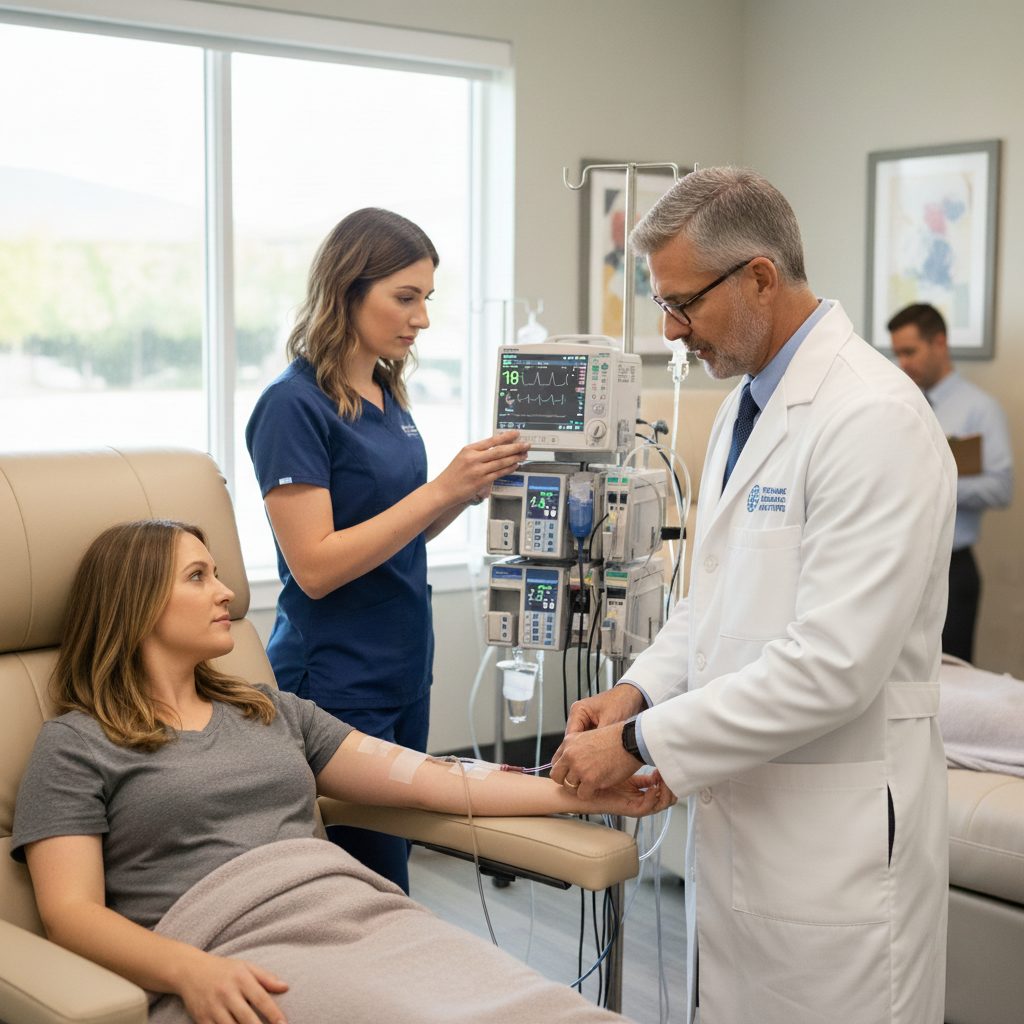
We monitor at the standard used for procedural sedation. Every infusion, for every patient:
A physician in the room
From the moment the infusion starts until you are through the early part of recovery. Trained in airway management, watching the monitors and watching you.
Pulse oximetry, continuously
It measures the oxygen saturation in your blood — the direct check that you are breathing adequately. Audible alarms, so a change is heard as well as seen.
Heart rhythm and blood pressure
Cardiac monitoring throughout, with automatic pressure readings. Ketamine moves both, and we would rather see it move than be told about it afterward.
A formal airway assessment
Before every infusion, recorded as a required step rather than left to the clinician’s judgment on the day.
Sedation depth scored, not estimated
On a validated scale, with a formal check before treatment starts, so “how deep are they” has an answer rather than an impression.
A structured discharge
Recovery scoring, repeated blood pressure readings, a psychiatric safety screen, a minimum observation period, and written instructions to take home.
Capnography measures the carbon dioxide you breathe out, and it can show a breathing problem before your oxygen level starts to fall. We use it when your history, your dose, or the way a session is going makes it the right call — not on every patient at every infusion. Saying otherwise would be easy and untrue.
Why
Why we watch this closely
None of this is here because ketamine is dangerous in the way people sometimes fear. It is here because ketamine is an anesthetic, and anesthesia spent forty years building a monitoring standard that transformed the specialty’s safety record. That progress did not come mainly from better drugs. It came from watching continuously, so that a change is noticed while it is still small and easily corrected.
That is the standard we use here. It means the answer to the question “how are you doing right now” is not an estimate. Your oxygen, your breathing, your heart rhythm and your blood pressure are measured second by second, and a physician trained in airway management is with you, reading them as they happen.
The practical effect is a calmer treatment, not a more worrying one. Most infusions pass without incident. Careful monitoring is a large part of the reason why, because small changes get corrected early, while they are still small, and before they become anything you would notice.
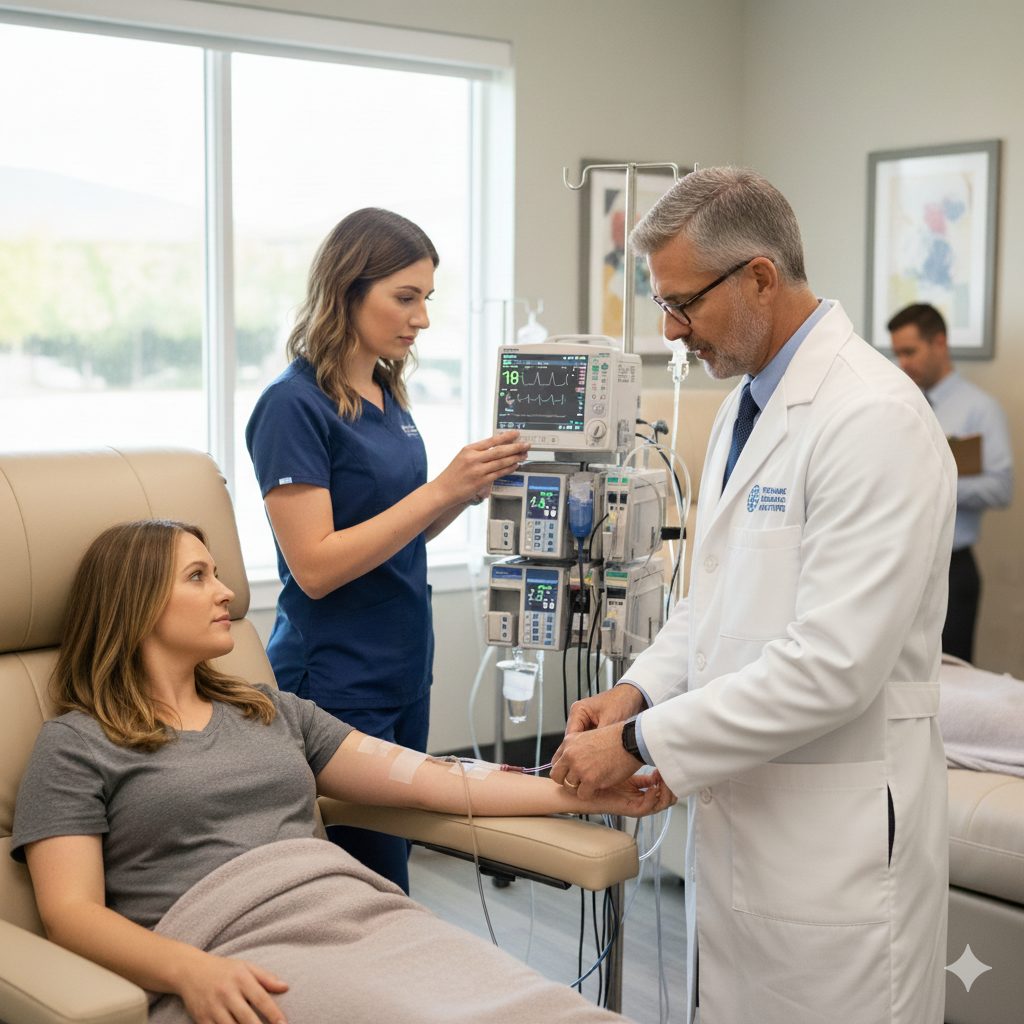
Someone is always with you. The monitors are read by the person who can act on them.
One at a time
We treat one patient at a time
There are never several infusions running at once, no clinician moving between rooms, and no point in your treatment when the physician caring for you is attending to someone else. The dose was worked out for you, and the adjustments made while it runs are made for you, in response to what your body and your mind are doing that day. From the moment your infusion begins until you are ready to go home, our attention is yours.
It is kept ready for the same reason an anesthesiologist keeps it ready in an operating room where nothing is expected to go wrong, and in the great majority of infusions it is never needed.
Ketamine’s reputation for being well tolerated is deserved. It is also the reason it is sometimes given with lighter monitoring than an anesthetic warrants, and published surveys of community ketamine practice report wide variation in how these treatments are monitored.
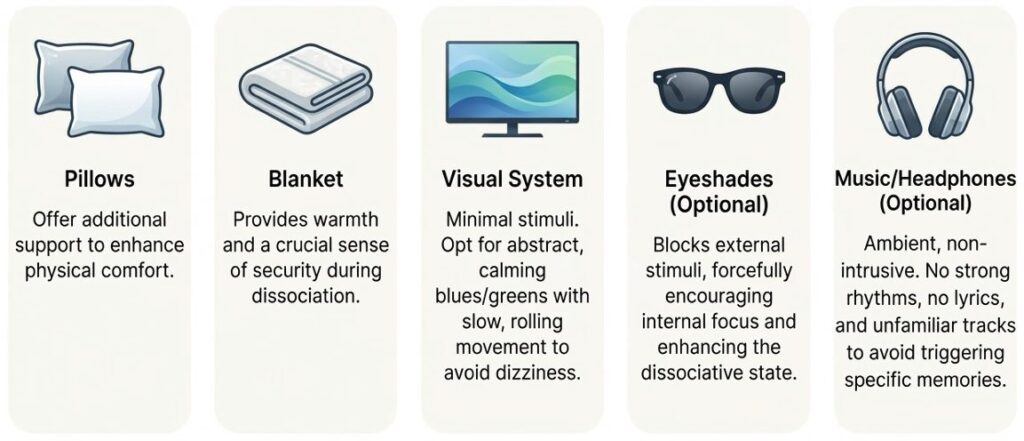
Comfort is part of the plan too — a pillow, a blanket, eyeshades and headphones are offered, not imposed.
If you are in crisis
If you are in crisis
We do treat patients with active suicidal thinking, but only on the recommendation of, and in ongoing co-management with, your psychiatrist.
See who is and is not a candidate →
References
1. Wilkinson ST, et al. An Update on Community Ketamine Practices. Am J Psychiatry. 2022. PMID 35491568.
2. KETALAR (ketamine hydrochloride) injection, prescribing information. NDA 016812, initial US approval 1970. US Food and Drug Administration.
3. McInnes LA, Qian JJ, Gargeya RS, DeBattista C, Heifets BD. A retrospective analysis of ketamine intravenous therapy for depression in real-world care settings. J Affect Disord. 2022;301:486-495. PMID 35027209.
4. Noppers I, Niesters M, Swartjes M, et al. Drug-induced liver injury following a repeated course of ketamine treatment for chronic pain in CRPS type 1 patients: a report of 3 cases. Pain. 2011;152(9):2173–2178. PMID 21546160.
Related pages
The RESTORE Method · Are You a Candidate? · Conditions We Treat · Our Results · Fees
Talk to us
Questions about whether this is safe for you?
We will go through your individual risks before you commit to anything — and tell you honestly if this is not for you.
RESTORE — ketamine therapy, done precisely.